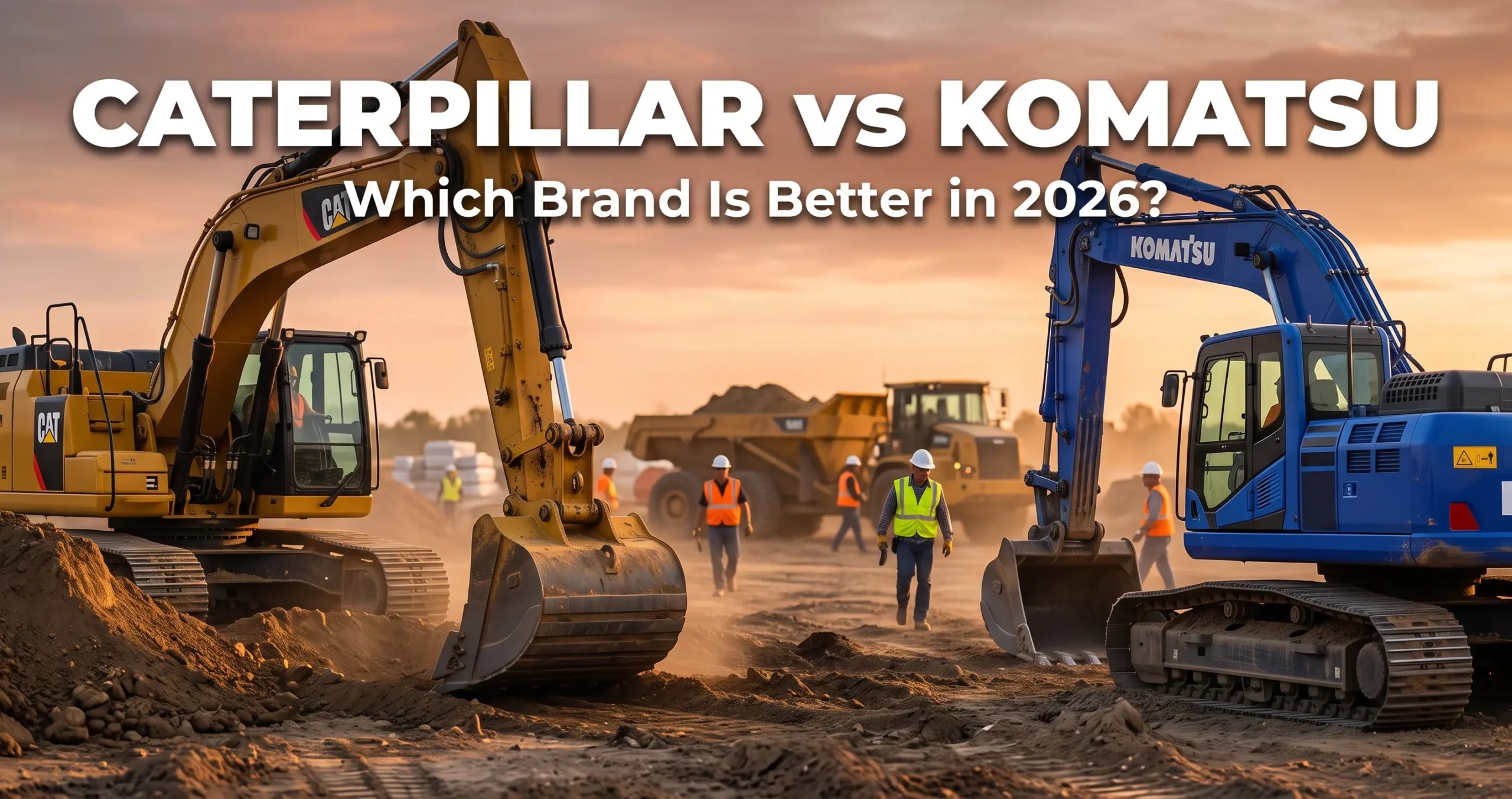
Walk onto almost any construction site in America, and you’ll likely see two names dominating the landscape: Caterpillar and Komatsu.
For decades, these industry giants have competed for the attention of contractors, fleet managers, and business owners looking for reliable heavy equipment. Whether you’re buying your first excavator or expanding a fleet of dozens of machines, choosing between Caterpillar and Komatsu is a decision that can impact productivity, maintenance costs, and resale value for years to come.
So, which brand is better in 2026?
The answer depends on your priorities.
Caterpillar is known for its extensive dealer network, exceptional resale value, and premium build quality. Komatsu, meanwhile, has built a strong reputation for fuel efficiency, advanced technology, and competitive pricing.
In this guide, we’ll compare Caterpillar and Komatsu across the factors that matter most, including reliability, ownership costs, financing, technology, and long-term value.
Caterpillar and Komatsu: A Quick Overview
Caterpillar
Founded in 1925, Caterpillar is one of the most recognizable names in heavy equipment worldwide. Its machines are widely used across:
- Construction
- Mining
- Forestry
- Agriculture
- Infrastructure projects
Popular Caterpillar models include:
- CAT 320 Excavator
- CAT D6 Dozer
- CAT 950 Wheel Loader
- CAT 299 Compact Track Loader
Caterpillar’s biggest advantage is its extensive dealer and support network throughout North America.
Komatsu
Founded in Japan in 1921, Komatsu has become one of Caterpillar’s strongest competitors.
Komatsu equipment is widely respected for:
- Fuel efficiency
- Advanced automation
- Competitive pricing
- Innovative technology
Popular Komatsu models include:
- Komatsu PC210 Excavator
- Komatsu D65 Dozer
- Komatsu WA380 Wheel Loader
- Komatsu SK820 Skid Steer
Today, Komatsu machines are found on construction sites across the United States and in more than 150 countries.
Reliability
Reliability is often the first consideration when investing hundreds of thousands of dollars in heavy machinery.
Caterpillar Reliability
Caterpillar has built its reputation on durability.
Many contractors report CAT machines operating effectively for:
- 10,000+ hours
- 15,000+ hours
- 20,000+ hours with proper maintenance
The company is particularly known for building equipment that performs well under harsh working conditions.
Common strengths include:
- Heavy-duty components
- Excellent hydraulic systems
- Long engine life
- Strong parts availability
Komatsu Reliability
Komatsu is equally respected for reliability.
Modern Komatsu equipment often includes:
- Efficient engines
- Advanced monitoring systems
- Reduced fuel consumption
- Predictive maintenance features
In recent years, Komatsu has narrowed the reliability gap significantly, making the competition closer than ever.
Winner: Caterpillar
While both brands are highly reliable, Caterpillar maintains a slight edge due to its long-standing reputation and exceptional dealer support in the United States.
Pricing
Cost is another major consideration.
Generally speaking, Caterpillar equipment carries a premium price tag.
Average Excavator Pricing
| Equipment | Estimated Price |
|---|---|
| CAT 320 | $260,000–$320,000 |
| Komatsu PC210 | $220,000–$290,000 |
Komatsu often offers:
- Lower upfront costs.
- Competitive financing.
- Attractive fleet discounts.
For small businesses and startups, those savings can make a significant difference.
Winner: Komatsu
If price is your primary concern, Komatsu usually offers better value.
Fuel Efficiency
Fuel costs can add up quickly.
For contractors operating multiple machines, even a small improvement in fuel economy can translate into thousands of dollars annually.
Komatsu has invested heavily in fuel-efficient technologies.
Features often include:
- Intelligent engine management.
- Automatic idle shutdown.
- Optimized hydraulic systems.
Many operators report lower fuel consumption compared to comparable CAT models.
Winner: Komatsu
Komatsu’s focus on efficiency gives it an advantage in this category.
Technology and Innovation
Modern construction equipment is increasingly dependent on technology.
Caterpillar Technology
CAT offers:
- VisionLink fleet management.
- Advanced telematics.
- Machine control systems.
- Remote diagnostics.
Komatsu Technology
Komatsu’s offerings include:
- Smart Construction solutions.
- Intelligent Machine Control.
- Autonomous mining technologies.
- Integrated GPS systems.
Many industry experts consider Komatsu one of the most innovative companies in heavy equipment.
Winner: Komatsu
Komatsu’s investment in automation and intelligent systems earns it the lead.
Dealer Network and Support
This category is where Caterpillar shines.
In the United States, CAT has one of the strongest dealer networks in the industry.
Benefits include:
- Faster parts availability.
- More service locations.
- Better technician access.
- Reduced downtime.
When equipment breaks down, support matters.
A machine sitting idle can cost thousands of dollars per day.
Komatsu’s support network continues to grow, but it still trails Caterpillar in North America.
Winner: Caterpillar
CAT’s dealer network remains one of its biggest competitive advantages.
Resale Value
Heavy equipment isn’t just a tool—it’s an asset.
Many contractors eventually sell or trade in equipment to upgrade their fleets.
Historically, Caterpillar equipment retains its value exceptionally well.
Example
After several years of ownership:
- CAT machines often command premium resale prices.
- Komatsu equipment generally depreciates faster.
This difference can amount to tens of thousands of dollars over time.
Winner: Caterpillar
If maximizing resale value is important, CAT is difficult to beat.
Financing Options
Both manufacturers offer financing programs.
Caterpillar Financial
CAT Financial provides:
- Equipment loans.
- Leasing options.
- Seasonal payment plans.
- Fleet financing.
Komatsu Financial
Komatsu Financial offers:
- Flexible payment terms.
- Competitive rates.
- Startup financing programs.
- Equipment leasing.
Small businesses often find Komatsu’s financing options particularly attractive.
Winner: Tie
Both companies provide excellent financing solutions.
Best for Small Businesses
If you’re a small contractor purchasing your first machine, consider:
Choose Caterpillar If You Want:
- Strong resale value.
- Extensive dealer support.
- Premium equipment.
- Long-term ownership.
Choose Komatsu If You Want:
- Lower upfront costs.
- Better fuel economy.
- Advanced technology.
- Competitive financing.
Real-World Scenario
Imagine two contractors.
Contractor A
Purchases a CAT 320.
- Higher upfront cost.
- Strong resale value.
- Excellent support network.
Contractor B
Purchases a Komatsu PC210.
- Lower purchase price.
- Better fuel efficiency.
- Lower operating costs.
Five years later, both are satisfied with their purchases.
That’s the reality of this comparison: there isn’t a universally “wrong” choice.
Frequently Asked Questions
Is Caterpillar better than Komatsu?
Caterpillar excels in dealer support and resale value, while Komatsu stands out in pricing and fuel efficiency.
Which brand lasts longer?
Both brands can exceed 10,000 operating hours with proper maintenance.
Is Komatsu cheaper than Caterpillar?
Yes. Komatsu equipment is generally less expensive than comparable Caterpillar models.
Which brand has better resale value?
Caterpillar consistently delivers stronger resale performance.
What do contractors prefer?
Many American contractors prefer Caterpillar due to familiarity and dealer support, although Komatsu continues to gain market share.
Final Verdict
So, Caterpillar vs Komatsu: Which brand is better?
If you’re looking for the safest long-term investment with excellent support and strong resale value, Caterpillar remains the benchmark in the United States.
However, if you’re seeking lower upfront costs, superior fuel efficiency, and cutting-edge technology, Komatsu is an outstanding alternative.
Ultimately, the best choice comes down to your business priorities.
Choose Caterpillar if support, durability, and resale value matter most.
Choose Komatsu if affordability, efficiency, and innovation are your top priorities.
The good news? In 2026, both brands represent some of the best heavy equipment available anywhere in the world, and whichever logo ends up on your job site, you’re likely making a smart investment.