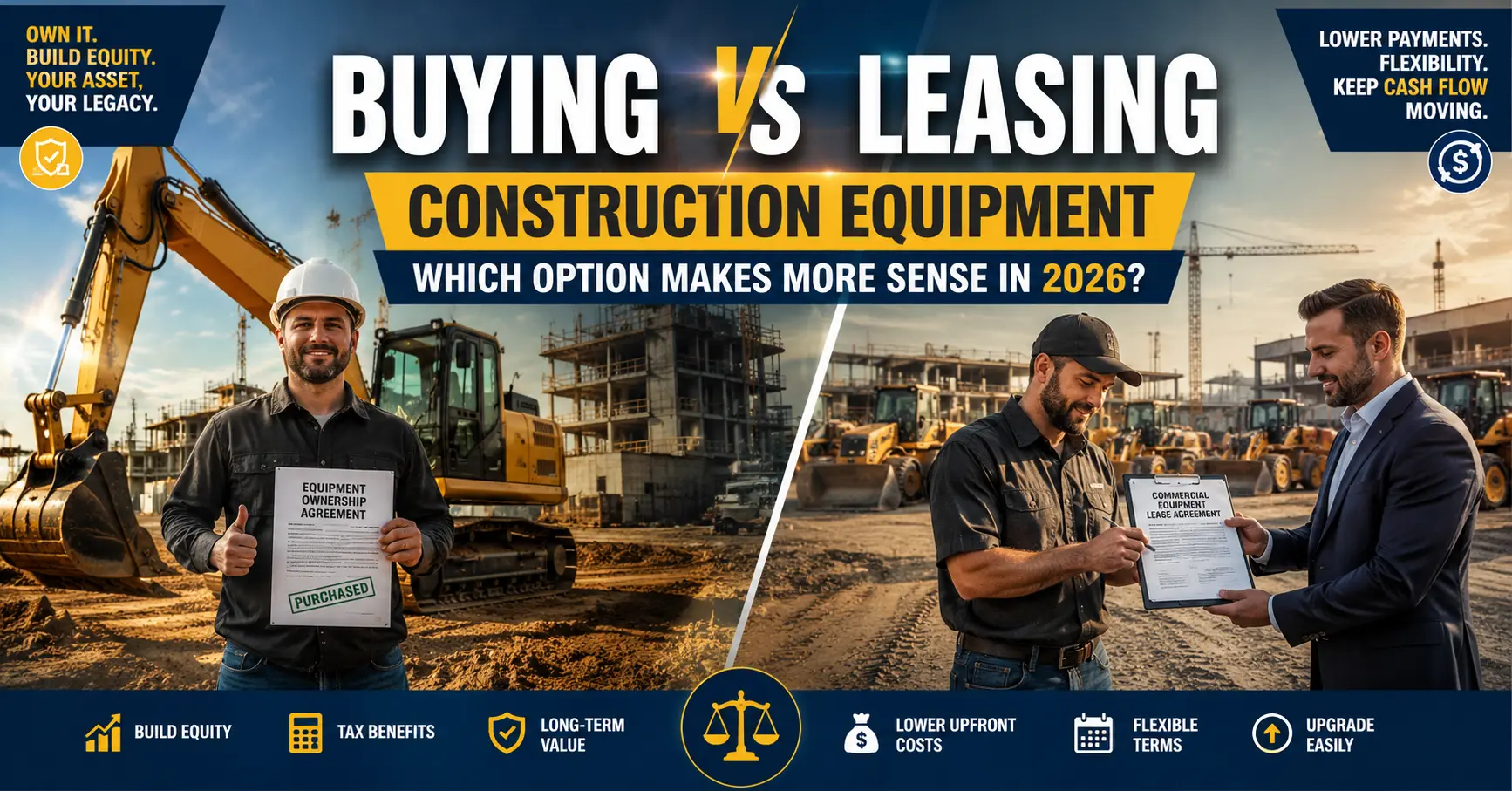
For contractors and construction business owners, few decisions are as important as determining how to acquire heavy equipment.
Whether you’re considering an excavator, bulldozer, skid steer, wheel loader, or crane, the question remains the same: Should you buy the equipment or lease it?
In 2026, the answer is more complicated than ever.
Construction equipment prices continue to rise, financing options have expanded, and leasing has become increasingly popular among businesses looking to preserve cash flow. At the same time, owning equipment still offers significant advantages, particularly for companies that plan to use machinery for many years.
There’s no one-size-fits-all answer. The right choice depends on your budget, project pipeline, tax strategy, and long-term business goals.
This guide breaks down the advantages and disadvantages of buying and leasing construction equipment to help you make an informed decision.
Why This Decision Matters
Construction equipment is expensive.
Consider the average price ranges for common machines:
- Excavator: $200,000–$350,000
- Bulldozer: $150,000–$400,000
- Wheel Loader: $180,000–$450,000
- Compact Track Loader: $60,000–$120,000
- Mobile Crane: $500,000–$1.5 million
Making the wrong decision can affect:
- Cash flow.
- Tax planning.
- Equipment availability.
- Profit margins.
- Business growth.
- Long-term operating costs.
For many contractors, equipment acquisition is one of the largest investments they’ll ever make.
What Does It Mean to Buy Equipment?
Buying construction equipment means your company owns the asset outright.
This can happen through:
- Cash purchases.
- Equipment loans.
- Heavy equipment financing.
- Home equity or business financing.
Ownership gives businesses complete control over the equipment, including when and how it’s used, modified, or sold.
Benefits of Buying
Build Equity
Unlike leasing, ownership creates value over time.
A contractor who purchases a $250,000 excavator may eventually sell it for $120,000 after years of use.
That remaining value stays with the business.
No Usage Restrictions
Owned equipment doesn’t come with:
- Hour limitations.
- Mileage restrictions.
- Lease-end penalties.
For companies operating equipment daily, this flexibility is invaluable.
Tax Advantages
Many businesses can take advantage of:
- Section 179 deductions.
- Depreciation benefits.
- Interest deductions.
Tax strategies vary, so it’s always wise to consult a CPA.
Strong Resale Value
Brands like Caterpillar, Komatsu, and John Deere often maintain impressive resale values.
Well-maintained equipment can become a long-term business asset.
Drawbacks of Buying
Ownership isn’t perfect.
Large Upfront Costs
Even with financing, purchasing equipment often requires:
- Down payments.
- Insurance.
- Registration costs.
- Taxes.
These expenses can strain cash reserves.
Maintenance Responsibilities
Owners are responsible for:
- Repairs.
- Routine maintenance.
- Replacement parts.
- Unexpected breakdowns.
A major engine repair can easily cost tens of thousands of dollars.
Depreciation
Heavy equipment loses value over time.
While premium brands hold value well, depreciation remains a reality.
What Does Leasing Mean?
Leasing allows businesses to use equipment for a specified period in exchange for monthly payments.
At the end of the lease, businesses typically have several options:
- Return the equipment.
- Purchase the equipment.
- Renew the lease.
- Upgrade to newer machinery.
Leasing has become increasingly popular among contractors looking to maintain financial flexibility.
Benefits of Leasing
Lower Initial Costs
One of the biggest advantages is preserving capital.
Rather than spending hundreds of thousands of dollars upfront, companies can spread expenses over time.
This allows businesses to invest in:
- Hiring.
- Marketing.
- Expansion.
- Additional equipment.
Access to New Technology
Construction equipment evolves quickly.
Modern machines now include:
- GPS guidance.
- Telematics.
- Remote diagnostics.
- Fuel optimization systems.
Leasing makes it easier to upgrade regularly.
Predictable Expenses
Monthly lease payments make budgeting simpler.
Many lease agreements also include:
- Maintenance packages.
- Service plans.
- Warranty coverage.
This can significantly reduce unexpected expenses.
Easier Approval
Many leasing companies offer more flexible qualification requirements than traditional lenders.
This is particularly beneficial for:
- New businesses.
- Startups.
- Contractors with limited credit history.
Drawbacks of Leasing
No Ownership
At the end of the lease, you don’t own the equipment unless you purchase it.
Years of payments may leave you without an asset.
Usage Restrictions
Lease agreements often include:
- Operating hour limits.
- Wear-and-tear requirements.
- Return conditions.
Exceeding these limits can result in additional fees.
Higher Long-Term Costs
Over many years, leasing can become more expensive than ownership.
For example:
- Monthly Lease: $4,000
- Lease Term: 60 Months
- Total Paid: $240,000
At the end of the lease, the equipment may still belong to the leasing company.
Buying vs Leasing: Side-by-Side Comparison
| Factor | Buying | Leasing |
|---|---|---|
| Ownership | Yes | No |
| Upfront Cost | High | Low |
| Monthly Payments | Optional | Yes |
| Maintenance | Owner Responsible | Often Included |
| Tax Benefits | Excellent | Good |
| Flexibility | High | Moderate |
| Resale Value | Yes | No |
| Equipment Upgrades | Limited | Easy |
When Buying Makes Sense
Buying is often the better choice if:
- You use equipment daily.
- You plan to keep it for many years.
- You value ownership.
- You want maximum resale value.
- You have sufficient capital or financing.
A large excavation company operating machinery year-round will usually benefit from ownership.
When Leasing Makes Sense
Leasing is ideal if:
- You’re a new contractor.
- Cash flow is a priority.
- You want newer equipment.
- Projects are temporary.
- You prefer predictable costs.
For seasonal businesses, leasing can be especially attractive.
A Real-World Example
Consider two contractors.
Contractor A: Buys an Excavator
- Purchase Price: $275,000
- Down Payment: $30,000
- Ownership After Loan: Yes
- Estimated Resale Value After 7 Years: $125,000
Contractor B: Leases an Excavator
- Monthly Lease Payment: $4,200
- Lease Term: 60 Months
- Maintenance Included: Yes
- Ownership After Lease: No
Both contractors achieve their business goals.
The difference lies in priorities.
Contractor A builds equity.
Contractor B preserves cash flow.
Questions to Ask Before Deciding
Before choosing, ask yourself:
- How often will I use this equipment?
- Can my business comfortably afford ownership?
- Do I want the latest technology?
- How important is cash flow?
- Am I prepared for maintenance costs?
- How long will I keep the equipment?
Your answers will usually point you toward the right decision.
Frequently Asked Questions
Is leasing construction equipment tax deductible?
In many cases, lease payments can be deducted as business expenses. Consult a tax professional for specific guidance.
Is it cheaper to buy or lease?
Buying is generally less expensive over the long term, while leasing typically requires less money upfront.
Can I buy equipment at the end of a lease?
Many lease agreements include purchase options.
Is leasing better for startups?
Often, yes. Leasing can preserve cash and simplify budgeting for newer businesses.
Which option is most popular?
Large, established companies often buy equipment, while smaller and growing businesses frequently choose leasing.
Final Thoughts
So, buying vs leasing construction equipment—which option makes more sense in 2026?
If your business values ownership, long-term savings, and building equity, buying is usually the better investment.
However, if preserving cash flow, accessing newer technology, and maintaining flexibility are your top priorities, leasing can be an excellent choice.
Ultimately, the best decision isn’t about what other contractors are doing. It’s about what aligns with your business strategy.
The most successful construction companies understand that equipment isn’t just a purchase—it’s a tool for growth. Whether you buy or lease, making a well-informed decision today can position your business for success for years to come.